
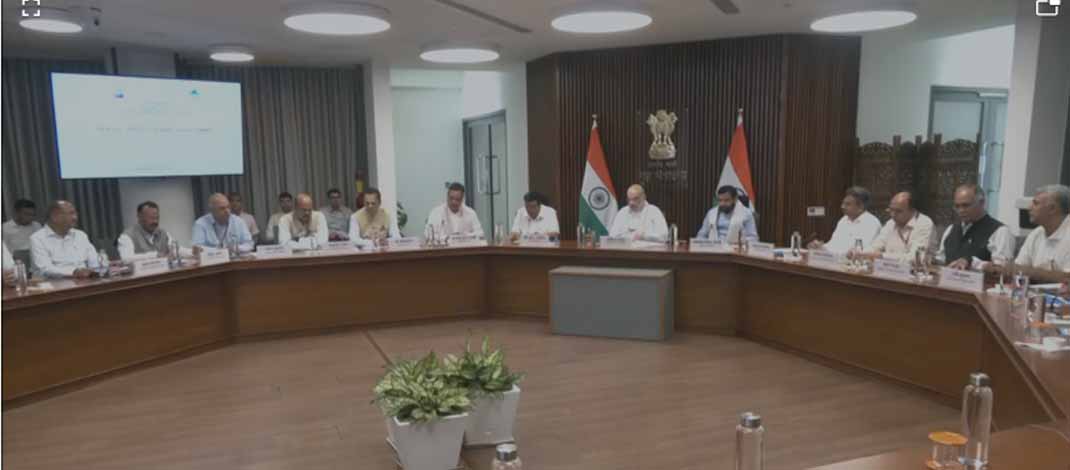
New Delhi : In a significant step towards strengthening inter-state cooperation on water management, the governments of Haryana and Rajasthan on Monday signed a landmark Memorandum of Understanding (MoU) for the Yamuna water project. The agreement was finalised under the chairmanship of Union Home Minister Amit Shah.
The MoU was signed by Haryana Chief Minister Nayab Singh Saini and Rajasthan Chief Minister Bhajanlal Sharma in the presence of Union Jal Shakti Minister C.R. Patil, marking a major milestone in ensuring better utilisation and distribution of Yamuna river water.
Under the agreement, Rajasthan will receive its allocated share of water in accordance with the provisions of the 1994 Upper Yamuna River Board agreement. The understanding is also expected to accelerate the implementation of the Renuka, Kishau, and Lakhwar dam projects, paving the way for improved water conservation and long-term water management in the region.
Expressing gratitude to Union Home Minister Amit Shah and Union Jal Shakti Minister C.R. Patil, Chief Minister Nayab Singh Saini described the agreement as a historic achievement that reflects the spirit of cooperative federalism and mutual coordination between states.
He said that under the 1994 agreement, Rajasthan will receive rainwater for drinking purposes during the monsoon period from July to October. The water will be supplied from the Hathnikund Barrage to Rajasthan through a dedicated pipeline, ensuring a reliable source of drinking water during the rainy season.
The Chief Minister emphasised that ensuring access to drinking water for every citizen is a shared responsibility. He said the initiative reflects the values of India’s cultural heritage and the spirit of Sanatan tradition, which considers providing water to those in need as a noble duty.
The agreement is expected to strengthen cooperation between Haryana and Rajasthan while giving fresh momentum to regional water infrastructure projects and promoting sustainable management of water resources for the benefit of both states.